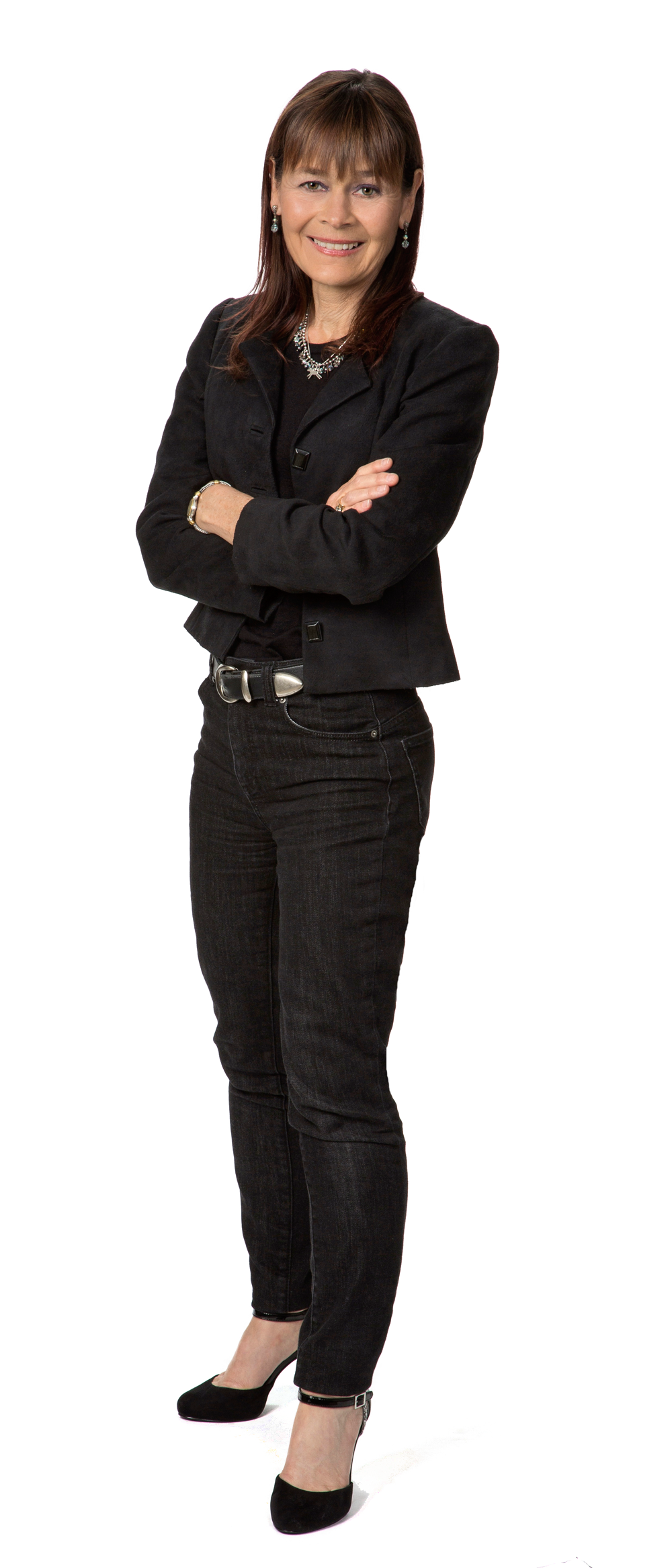
Intellectual Property Law Blog contributor Josh Escovedo was recognized this week as a Top Author for the topic of trademarks in the JD Supra 2019 Reader’s Choice Awards.

Josh Escovedo practices in Weintraub’s Litigation and Intellectual Property sections.  He counsels and advises clients in a variety of litigation matters with an emphasis on intellectual property, commercial, and real estate litigation. Josh also provides his intellectual property clients with advice and counsel regarding trademark and copyright usage, registration, acquisitions, and transfers.

Josh writes frequently for this blog, on a wide range of IP topics.   His topical and accessible posts about developments in trademark law are the body of work recognized by JD Supra.  He also regularly publishes articles concerning copyright law.

JD Supra delivers need-to-know legal and business content to professionals on multiple platforms across the web. The Readers’ Choice Awards recognize top authors and firms who were read by C-suite executives, in-house counsel, media, and other professionals across the JD Supra platform during 2018. The awards recognize authors for their visibility and thought leadership covering 26 key, cross-industry topics, including trademarks. Editors chose the topics covered in this year’s Readers’ Choice Awards for their timeliness, as well as their proven, ongoing importance. In each category, ten authors and one firm were recognized for consistently having the highest readership and engagement within that category for all of 2018. Across all categories and 50,000 contributors, 228 authors were recognized for excellence and achievement.

 

JD Supra Readers Choice Top Author 2019

Over twenty years ago, the Ninth Circuit decided the case of Dr. Seuss Enterprises., LP v. Penguin Books USA, Inc.  That case involved a copyright infringement lawsuit brought by Dr. Seuss over a book entitled The Cat NOT in the Hat! A Parody by Dr. Juice.  This book was about the O.J. Simpson trial presented in Seuss style rhyming verse and animation. The work begins:

A happy town

Inside L.A.

Where rich folks play

The day away.

But under the moon

The 12th of June.

Two victims flail

Assault!   Assail! 

Somebody will go to jail! Who will it be?

Oh my!  Oh me!

The book also presents a view of the OJ Simpson criminal murder trial from OJ’s perspective: “A man this famous/Never hires/Lawyers like/Jacoby Meyers/When you’re accused of a killing scheme/You need to build a real Dream Team.” The book’s illustrations included Simpson depicted 13 times in the distinctively scrunched and shabby stovepipe hat worn by the Cat in the Hat.  The defendants claimed that their use was non-infringing fair use; the court did not agree.

Over twenty years later (and just this month), the Ninth Circuit decided the case of Dr. Seuss Enterprises v. Comicmix, LLC et al., which involved a copyright infringement lawsuit over a Star Trek and Dr. Seuss mashup entitled Oh, The Places You’ll Boldly Go.  This work intermixes Star Trek characters like Captain Kirk, Spock and the Starship Enterprise in the Seuss world; for example, the cover features Kirk standing on a small moon or asteroid above the Enterprise  evoking the rainbow ringed disc and tower or tube pictured on the original work’s cover, The defendants admitted that they “painstakingly attempted” to make their illustrations “nearly identical” in certain respects to illustrations in the Dr. Seuss book, Oh, The Places You’ll Go, and went to great lengths to mimic the Seuss writing style.  The defendants claimed that their use was non-infringing fair use; the court agreed.  As the Grinch said, “how could it be so?”

In Cat NOT in the Hat, the defendant’s case relied mostly on fair use; primarily that the work was a parody.  The Ninth Circuit, in determining the first fair use factor – the purpose and character of the use – found the book was not a parody.  The court noted that while the book “does broadly mimic Dr. Seuss’ characteristic style, it does not hold his style up to ridicule” and that “[t]he stanzas have no critical bearing on the substance or style of The Cat in the Hat.”  The court essentially closed the door on the defendant’s case when it noted that there is “no effort to create a transformative work with “new expression or meaning.”

In Oh, The Places You’ll Boldly Go, the defendants also relied on the fair use defense and claimed that their work was a parody. While the Ninth Circuit, similar to Cat NOT in the Hat found the work not to be a parody, the court went on to determine that it was “highly transformative.”

It’s challenging to reconcile the treatment of the first fair use factor in the two cases, as the Ninth Circuit in Cat NOT in the Hat did not go into an analysis of the transformative nature of the work separate and apart from the inquiry into whether it was a parody.  In the Boldly Go case the court went to great lengths to explain how and why the work is transformative.  The court noted that while the defendants borrowed (liberally at times) from the Seuss work, the “elements borrowed were always adapted or transformed” by the inclusion of Star Trek (or Trek like) characters; the defendants’ additional material reframed the original material from a unique Star Trek viewpoint.

In considering the third factor[1], whether the amount and substantiality of the portion used in relation to the copyrighted work as a whole are reasonable in relation to the purpose of copying, the court in Cat took great issue with the defendant’s frequent use of the Cat in the Hat image and rejected the philosophical parallels the defendants attempted to draw between the two works, calling it a completely unconvincing post-hoc characterization.

However, in Boldly Go the court found that the defendants took no more from the original work than was necessary in order to create a mash-up of Go and Star Trek.  The court went to great lengths to examine the elements of the Seuss work entitled to copyright protection and measure the extent of the defendants’ copying of those elements.  For example, the court noted that Seuss “may claim copyright protection in the unique, rainbow-colored rings and tower on the cover of Go!  Plaintiff, however, cannot claim copyright over any disc-shaped item tilted at a particular angle.”  Even though Boldly Go was found not to be a parody, the court found that it did not “copy more than is necessary to accomplish its transformative purpose.”

Like Cat, Boldly Go liberally copied certain aspects of Go, however, the court specifically noted that the defendants did not copy verbatim text or replicate entire images.  To the author’s understanding, neither did Cat NOT in the Hat. The only significant difference that may explain the disparate treatment of this factor is that Cat NOT made liberal use of the Cat figure while Boldly Go apparently made no use of any major Seuss character.

The last fair use factor examines the effect (e.g., market harm) the infringing work may have on the value of the copyrighted work.  The key purpose is to determine to what degree the infringing work is a substitute for the original work.  Transformativeness and this factor are closely related; if a new work is transformative it’s not a substitute for the original work. In Cat NOT in the Hat the court said that because the work was not transformative, “market substitution is at least more certain, and market harm may be more readily inferred.”

In Boldly Go the court noted that Go is an extremely popular book for graduates and Seuss or its licensees have published many derivatives of Go.  The plaintiff claimed the work in question would harm its licensing opportunities.  The court found that Boldly Go is not a substitute for the original work as a children’s book; its impact on the market for graduation gifts or derivatives is a closer question. Because the court found Boldly Go to be transformative, the plaintiff was required to introduce evidence showing harm and such showing must be by a preponderance of the evidence.  The court found that the plaintiff failed to meet this burden.  Because the plaintiff introduced no evidence tending to show that it would lose licensing opportunities or revenues as a result of publication of Boldly Go or similar works, the potential harm to plaintiff’s market remains hypothetical.  As such, the court concluded that this factor favors neither party.

In Cat Not in the Hat the court found that the weight of the fair use factors favored a finding against fair use while Bold Go resulted in the opposite.  While these cases may seem tough to reconcile, there are distinct factual differences that may have caused the same court to find one way or another.  Also, followers of fair use cases appreciate that fair use is by no means static; it’s more like an active pendulum.

[1] In both matters, the second factor – the nature of the copyrighted work – favored the plaintiff.  This is usually the case with dealing with creative works.

The United States Supreme Court granted a writ of certiorari in Iancu v. NantKwest to determine whether a patent applicant, win or lose, must pay the salaries of the United States Patent and Trademark Office’s (“USPTO”) in-house attorneys in district court actions challenging the rejection of patent claims by USPTO patent examiners.

When a patent applicant files for a patent, the USPTO assigns an examiner to review the application and determine whether the claims are patentable and a patent should issue.  If the patent examiner rejects claims in a patent application, the applicant can appeal that decision to the USPTO’s Patent Trial and Appeal Board (“PTAB”).  If that appeal is not successful, the applicant has two options for challenging the rejection.  The applicant can either 1) appeal the rejection directly to the Court of Appeals for the Federal Circuit or 2) file a civil action in the District Court for the Eastern District of Virginia.  35 U.S.C. §145.  Unlike in an appeal to the Federal Circuit, if the applicant brings an action in the district court, “[a]ll the expenses of the proceedings shall be paid by the applicant” regardless of the outcome of the litigation.  Id. 

There are pros and cons to these two options for challenging an examiner’s decision.  The Federal Circuit typically offers faster resolution, but it relies only on the record that was before the USPTO and does not review the matter de novo.  In contrast, filing a civil action in district court is slower, litigation expenses may be higher, and the patent applicant is required to pay the USPTO’s expenses regardless of whether the applicant wins or loses.  The district court, however, offers the applicant the option to present new evidence that was not presented to the USPTO, and the court must review that new evidence de novo.

While the statutory language requiring an applicant to pay all expenses in district court actions has long been in effect, the USPTO had not sought to recover attorneys’ fees in the past.  The USPTO, however, argues that two things changed in 2013 that led it to seek attorneys’ fees.  First, “in the America Invents Act, Congress directed the agency to set its fees so as ‘to recover the aggregate estimated costs to the [USPTO] for processing, activities, services, and materials relating to patents *** and trademarks.’”  Second, proceedings under Section 145 “have grown increasingly expensive and the single largest expense to the USPTO is often the time that agency employees must devote to those matters.’”

Therefore, for the first time in Shammus, the USPTO sought attorneys’ fees as part of its expenses under Section 145’s trademark provision.  Allowing recoupment of attorneys’ fees, the Court of Appeals for the Fourth Circuit explained that “the imposition of all expenses on a plaintiff in an ex parte proceedings, regardless of whether he wins or loses, does not constitute fee-shifting that implicates the American Rule.”  Shammus v. Focarino, 784 F.3d 219 (4th Cir. 2015).  The “American Rule” assumes each party pays its own attorneys’ fees absent explicit statutory authority to the contrary.

In Iancu, the USPTO has sought attorneys’ fees under Section 145’s patent provisionThe question raised in Iancu is whether the “expenses” that the applicant must pay in a district court proceeding challenging an examiner’s rejection of patent claims include the salaries for attorneys’ employed by the USPTO who work on the case.  In Iancu, the USPTO sought to recoup over $78,000 in attorney and paralegal salaries and over $33,000 in expert witness expenses.  The district court allowed reimbursement for the expert witness expenses but not the salaries.  The district court distinguished between the two types of expenses in finding that in light of the presumption under the “American Rule,” Section 145 was not sufficiently “specific and explicit” to cover attorneys’ fees or salaries.  The Federal Circuit, in a divided decision, reversed finding that “expenses” include “attorneys’ fees.”  Acting sua sponte, the Federal Circuit en banc reheard the case and ruled 7-4 that Section 145 does not cover attorneys’ fees because the statutory language “all the expenses” is not sufficiently “specific and explicit” to overcome that presumption of the “American Rule.”

In its petition for certiorari, the USPTO points to the Shammus ruling regarding trademark actions in support of its argument that the “American Rule” only applies in fee-shifting scenarios where a prevailing party is seeking to recoup expenses rather in cases such as this where the applicant must always pay the expenses.  However, the Federal Circuit en banc stated “Shammas’s holding cannot be squared with the Supreme Court’s line of non-prevailing party precedent applying the American Rule.”  The Federal Circuit “noted that a statute awarding attorneys’ fees to a losing party would represent ‘a particularly unusual deviation from the American Rule” because “[m]ost fee-shifting provisions permit a court to award attorney’s fees only to a prevailing party, a substantially prevailing party, or a successful litigant.’”

The USPTO also makes policy-based arguments for the reimbursement of attorneys’ salaries.  It argues that applicants have an alternative appellate process where they do not have to pay the USPTO’s expenses, a substantial amount of attorneys’ time is devoted to Section 145 district court proceedings given the additional discovery and new evidence presented, and it is unfair to make other patent applicants effectively underwrite the cost of Section 145 proceedings.

In its opposition to the petition for certiorari, NantKwest pointed out that “expenses” in Section 145 is at best ambiguous.  The fact that “expenses” could be construed to encompass attorneys’ fees or salaries is not sufficient to “specifically and explicitly” authorize attorneys’ fees and overcome the presumption of the “American Rule” that each party pays its own attorneys’ fees absent explicit statutory language to the contrary.  The USPTO, however, argues that even if the American Rule applies, “[a]ll the expenses of the proceedings” “is sufficiently specific and explicit to overcome the presumption … and authorize reimbursement of the USPTO’s” attorneys’ salaries.

The Supreme Court will decide this issue in the upcoming months, so stay tuned.

This week, the Supreme Court resolved a split in the circuits regarding an issue in copyright law that affects copyright owners in California.  Until now, the law in the Ninth Circuit was that a copyright owner could file suit for infringement as soon as they filed a copyright application in the Copyright Office.  However, in Fourth Estate Public Benefit Corp. v. Wall-Street.com, LLC (U.S. Supreme Court, March 4, 2019), the Court rejected this approach, holding that a copyright owner cannot file suit for infringement until the work has been registered by the Copyright Office.

The plaintiff, Fourth Estate Public Benefit Corp., is a news group who writes online articles.  The defendant, Wall-Street.com, is a website for news articles.  Pursuant to a license, Fourth Estate licensed its articles to Wall-Street.com.  Wall-Street.com cancelled the license, but continued to publish Fourth Estate’s articles, in violation of the license.   Fourth Estate filed applications in the Copyright Office to register the copyrights in its articles, and then filed suit against Wall-Street.com for copyright infringement.  Wall-Street.com moved to dismiss the complaint on the grounds that Fourth Estate had not registered its copyrights within the meaning of the Copyright Act of 1976, as amended, as of the filing of the complaint.  The district court granted Wall-Street.com’s motion to dismiss.  The Eleventh Circuit Court of Appeals affirmed.

Copyright protection exists as soon as a work of expression is created.  However, under the Copyright Act, a copyright owner cannot file an action for infringement until “registration…has been made.” 17 U.S.C. §411(a).

The circuit courts are divided as to the meaning of the phrase “registration…has been made,” as set forth in §411(a).  Some circuits, including the Ninth Circuit, take the “application approach,” holding that a copyright has been registered, and therefore an action for copyright infringement can be filed, once the copyright owner has filed its application for registration and the application has been received by the Copyright Office.  Other circuits, including the Eleventh Circuit, take the “registration approach,” holding that a copyright has not been registered, and therefore an action cannot be filed, until the Copyright Office has actually registered the work.

The Supreme Court granted certiorari in the case to resolve the split in the circuits.  The Court held that the “registration approach” is the correct interpretation of §411(a), and that “registration” means action taken by the Register of Copyrights.

The Court explained that the first §411(a) sets forth the rule that an action for infringement cannot be filed until registration of the copyright has been made, while the second sentence provides an exception to the rule.  The second sentence states that if a copyright application has been submitted to the Copyright Office, but registration has been refused, the applicant can file an action for infringement if they provide notice of the action and a copy of the complaint to the Register of Copyrights.   The Court reasoned that if “registration” meant application, then the second sentence would be superfluous; an applicant could just file suit as soon as they filed their copyright application.

The Court said that the third sentence of §411(a) further supports the “registration approach.”  That sentence provides that the Register of Copyrights may optionally join an action with respect to the issue of registrability of the copyright. According to the Court, this sentence would be meaningless if a suit could be filed before the Register had acted on the copyright application.

The Court noted that other sections of the Copyright Act support this interpretation.  For example, §411(a) refers to examination of the application by the Register of Copyrights, and includes the steps of determining whether the work is copyrightable and deciding whether to allow or refuse registration. The statutes also provide for preregistration, a specific process which allows an applicant seeking a copyright for a work for which predistribution infringement is a risk (such as a film or musical composition) to receive a limited review by the Copyright Office and the right to file an infringement action prior to registration.

Fourth Estate argued that an applicant may run out of time to file suit while waiting for the Copyright Office to register their copyright.  The Court found this argument unpersuasive, pointing out that the average time to obtain a copyright registration is about seven months, leaving plenty of time left in the three-year statute of limitations, and that, in certain cases, an applicant can request expedited processing.

So, the message of this case is clear: the best practice for copyright owners in California, and throughout the U.S., is to file an application to register their copyright as soon as possible for any work for which they might, at some time in the future, need to file an infringement suit.

Companies have a number of tools available to them to help protect their intellectual property, including trade secret and other proprietary information that give them a competitive advantage. Many employers utilize detailed provisions in their employee handbooks and employment agreements to protect this information. One key provision has been the use of coworker non-solicitation provisions that prevent a departing employee from seeking to “raid” his or her former coworkers to join him or her at their new place employment, usually a business competitor.James Kachmar

Generally, these provisions state that an employee agrees during their employment, and for some period after their employment ends (usually one year), that he or she will not solicit any former coworkers to seek employment with their new employer. Now, some recent case law has brought the use of these non-solicitation provisions into question as possibly violating section 16600 of California’s Business and Professions Code, which prohibits the use of non-compete provisions except in certain limited circumstances.

For years, California courts have recognized the right of employers to use non-solicitation provisions in employment agreements to prevent employees from “soliciting” their coworkers to join them at a new employer.  For instance, in 1985, a California appellate court in Loral Corp v. Moyes, 174 Cal.App.3d 268 (1985), held that a non-solicitation of fellow employees provision in an employment agreement was lawful because the co-workers were free to seek employment with a competitor, they just couldn’t be contacted first by the departing employee. (As opposed to non-solicitation provisions that have been routinely upheld, courts have held that “no-hire” provisions, i.e. that a departing employee could not hire a former co-worker, have been held unenforceable as an invalid non-compete in violation of section 16600.)

The enforcement of non-solicitation of co-worker provisions remained relatively consistent until November 2018 when a court in AMN Healthcare, Inc. v. Aya HealthCare Services, Inc., 28 Cal.App.5th 923, granted judgment against an employer who was attempting to enforce a co-worker non-solicitation provision against former employees. In AMN, the departing employees were recruiters for temporary nurses who left AMN to join a competitor in the industry. AMN sued the competitor and former employees claiming they had violated a contractual provision not to solicit or recruit their former co-workers, i.e. the nurses being hired for temporary nursing assignments.

The Court affirmed summary judgment in favor of the competitor and former employees, holding that the co-worker non-solicitation provision violated section 16600 of the California Business and Professions Code, which provides that agreements that restrain a person’s trade or profession are unenforceable.  The AMN Healthcare Court relied heavily on the California Supreme Court’s ruling in Edwards v. Arthur Andersen LLP, 44 Cal.4th 937 (2008), which broadly struck down non-compete agreements preventing employees from competing against their former employers.

It remained an open question following the AMN Healthcare decision whether other courts would follow its holding concerning the unenforceability of an employee non-solicitation provision.  For instance, would other courts limit the AMN holding and decline to follow it because:

(1) The former employees who were being sought to be restrained by AMN were recruiters such that any prohibition on solicitation would necessarily restrain them in their profession as recruiters; or

(2) The former co-workers they were targeting for recruitment were temporary nurses who served short assignments so that enforcing the non-solicitation provision could limit those employees’ ability to obtain new work after their temporary assignments ended.

We did not have to wait long to see what other courts would do. Two months after the AMN decision, another court followed the lead of the AMN Healthcare Court and is allowing a claim to go forward attacking a co-worker non-solicitation provision.  In Barker v. Insight Global, LLC (Jan. 11, 2019 N.D. Cal.), Judge Beth Labson Freeman recently reversed herself and granted the plaintiff-employee’s motion for reconsideration to allow him to state a claim as a class representative against his former employer for the use of co-worker non-solicitation provisions in its employment agreements.

Judge Freeman held that the recent AMN Healthcare decision (her initial order dismissing the claim came three months prior to the AMN Healthcare decision) was likely consistent with the current state of California law regarding these non-solicitation provisions, especially in light of the Edwards v. Arthur Andersen decision. She denied the defendant-employer’s motion to dismiss the former employee’s claim and ruled that plaintiff should be allowed to present a claim that the use of an employee non-solicitation provision in his employment agreement violated section 16600 and was therefore an unfair business practice.

The Barker case is still in the early stages but employers should be concerned that a court has decided to follow the holding of the AMN Healthcare decision. In light of these recent developments, employers should carefully review any non-solicitation provisions in their employment agreements with their attorneys to determine whether they are at risk at facing claims or a result similar to those in the AMN Healthcare and Barker cases.